Cyanotype - Art in Prussian Blue
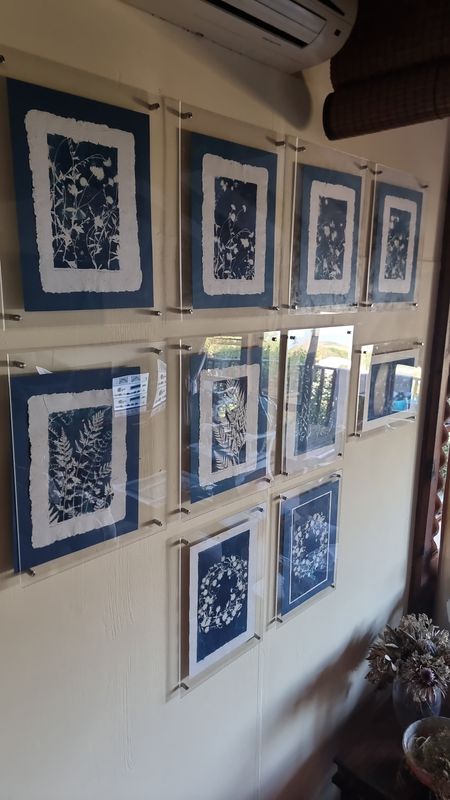
Invented in 1842 by English polymath Sir John Herschel, cyanotype is a photographic printing process that uses iron salts and UV light to produce a vibrant, monochromatic Prussian blue image. It was originally developed as a cheap, efficient method to copy scientific notes and technical drawings.
The Discovery
Sir John Herschel—who also coined terms like "photography," "negative," and "positive"—was experimenting with iron compounds when he developed the cyanotype. He discovered that by coating paper with a mixture of potassium ferricyanide and ferric ammonium citrate and exposing it to sunlight, he could create an insoluble, permanent blue dye. Because of this rich color, the process was named "cyanotype," derived from the Greek word for "dark blue".
The First Photo Book
While Herschel invented the process, botanist and photographer Anna Atkins is credited with popularizing it. In October 1843, Atkins published Photographs of British Algae: Cyanotype Impressions. By using the camera-less "photogram" method—placing seaweed specimens directly onto the light-sensitive paper—she created the very first book to be photographically illustrated.
The Rise of the Blueprint
During the Industrial Revolution, the cyanotype became the favored method for reproducing architectural layouts, diagrams, and engineering schematics. Because the paper was inexpensive and easy to develop, architects and engineers could rapidly and affordably mass-produce copies of their designs. This practical application permanently coined the term "blueprint".
The Modern Era
Throughout the 20th century, cyanotypes eventually gave way to modern reprographics, photocopying, and digital printing. However, the medium experienced a major resurgence in the fine arts and crafts communities. Today, artists and photographers continue to use the historic cyanotype process for its hands-on, tactile nature and its striking, aesthetic aesthetic.
Display prices in:ZAR